Steel Frames

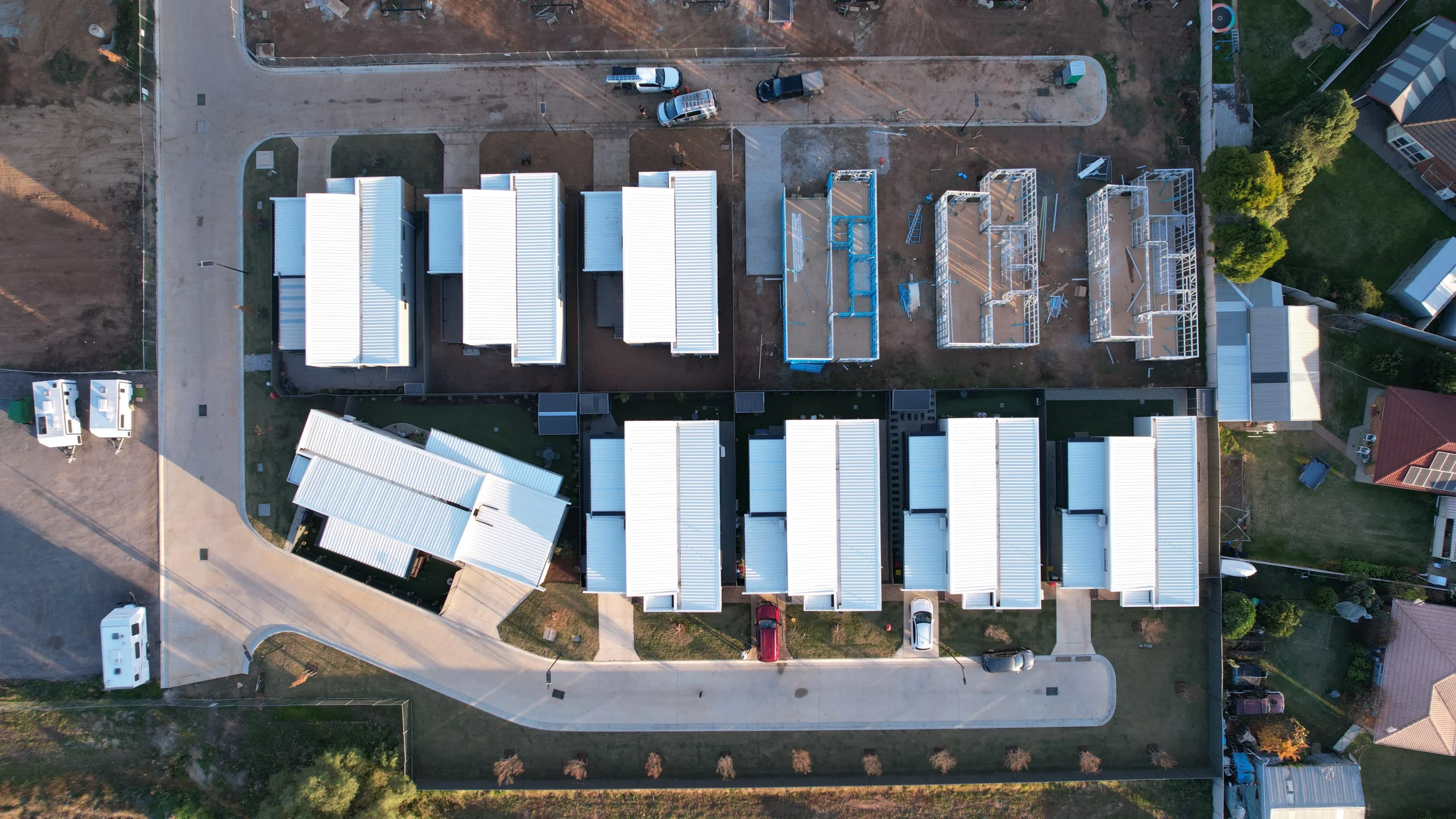
Steel does not corrode randomly, and it does not corrode at the same rate everywhere. It corrodes at a rate that Australian Standards actually classify and measure, based mostly on one factor: distance from the coast. That means corrosion near the coast is not a reason to avoid steel framing, it is a specification problem with a documented, standard answer. This guide covers how corrosion protection on light gauge steel actually works, how Australian Standards classify corrosivity zones, what that means specifically for Melbourne and coastal Victoria, and the details that matter most once a project sits within reach of salt air.
Corrosion is an electrochemical reaction between the base steel, oxygen and moisture, and it accelerates in the presence of airborne salt, which is why coastal environments are consistently more corrosive than inland ones. Light gauge steel framing is not left as bare steel to deal with this on its own. It is manufactured with a metallic coating, typically an aluminium and zinc alloy, applied before the steel is roll formed into studs, tracks and other framing sections. That coating works through what is known as sacrificial (or galvanic) protection: the coating metal corrodes preferentially, protecting the base steel underneath for as long as the coating itself remains intact.
Australian Standard AS 4312, Atmospheric corrosivity zones in Australia, sets out a classification system, ranging from C1 (very low) through to CX (extreme), based on a combination of distance from the coastline and the character of the coast itself, since a sheltered bay behaves very differently to open ocean surf. The Standard notes that chloride influence from sea spray does not typically extend more than about a kilometre inland under normal conditions, though flat terrain and strong onshore winds can extend that in some locations. What is often missed is that AS 4312 does not treat every Australian coastline the same. It specifically distinguishes exposed surf coasts from sheltered bay environments, and Melbourne falls firmly into the more sheltered category.
AS 4312 also accounts for what it describes as micro climatic factors sitting on top of the broad distance based categories: local shelter from prevailing wind, exposure to regular rain washing (which can actually reduce salt accumulation on a surface compared with a sheltered, rarely washed one), and elevation, since the Standard allows a reduced category for sites more than 50 metres above sea level once they sit beyond about five kilometres from the shoreline. Two sites at an identical straight line distance from the water can genuinely carry different practical corrosivity depending on these local factors, which is part of why AS 4312 is treated as a starting classification to confirm for a specific site rather than a simple postcode lookup.
AS 4312 classifies Melbourne and Hobart as temperate quiet environments, a materially less aggressive category than the temperate surf classification given to open coast cities like Sydney, Wollongong or the Gold Coast. In practical terms, at the same distance from the water, a temperate surf location can sit two full corrosivity categories higher than a temperate quiet one such as Melbourne. That does not mean corrosion protection is unnecessary in bayside and coastal parts of Victoria, since the categories still climb sharply within the first few hundred metres of the shoreline, but it does mean the blanket assumption that all coastal Australian construction faces the same corrosion risk is not accurate, and Port Phillip Bay’s more sheltered character genuinely changes the specification conversation compared with an exposed ocean beach.
BlueScope’s TRUECORE® steel, one of the framing products CMC Steel Solutions may specify for a project, uses BlueScope’s Activate® metallic coating technology, an aluminium and zinc alloy coating typically supplied at the AZ150 coating class under AS 1397, meaning a minimum coating mass of 150 grams per square metre across both sides of the steel. Beyond the base corrosion resistance this coating provides across the flat surface of a stud or track, Activate® technology is specifically engineered to improve protection at cut edges, the point on any roll formed or site cut steel section where the coating is interrupted and the base steel is briefly exposed. This is a genuinely important detail, since cut edges are historically one of the more vulnerable points on any coated steel product, and it is worth noting plainly that TRUECORE® is one of several steel products CMC may specify, with the right product for a given project confirmed at the design stage rather than assumed by default.
Two practical details drive most real world coastal corrosion issues on a light gauge steel frame, and both are addressable through correct specification and detailing rather than through avoiding steel altogether. The first is cut edge protection, covered above. The second is galvanic contact between steel framing and a different, less compatible metal, most commonly copper plumbing pipe passing through a wall cavity. Where dissimilar metals stay in direct contact in the presence of moisture, a separate galvanic cell can form and accelerate corrosion at that contact point specifically. The standard remedy, and one already built into CMC Steel Solutions’ own product range through steel frame grommets, is to physically isolate the two metals using a non conductive fitting at every penetration, rather than allowing bare copper pipe to sit directly against a bare steel stud.
Timber framing faces its own coastal durability questions, generally centred on moisture absorption, fungal decay and, depending on the specific location, termite pressure, all of which tend to be worse in the humid, salt laden air common to coastal environments rather than better. Coated steel framing shifts the coastal durability conversation to a single, well understood and standardised variable: coating class matched to corrosivity category under AS 4312. That is a more predictable problem to design around than the range of moisture related timber degradation mechanisms a coastal environment can accelerate, though it is worth being fair that a correctly detailed and maintained timber frame can also perform well near the coast. The practical difference is that steel’s coastal durability is governed by a documented classification system with a specific, checkable answer for any given site, rather than depending on ongoing chemical treatment condition.
A correctly specified and detailed steel frame in a coastal corrosivity zone is not a maintenance free proposition in the sense of needing zero attention, but the maintenance burden sits mostly with the building envelope around the frame, not the frame itself. Cladding, flashings and sealant joints are the elements actually exposed to weather and salt air directly, and keeping them intact is what prevents moisture reaching the frame in the first place, which matters for steel framing in a coastal zone in much the same way it matters for a timber frame anywhere. Periodic visual inspection of any exposed steel, particularly at penetrations, junctions and cut edges where coating protection is most likely to be compromised, is sensible practice on any coastal build regardless of frame material, and is a natural point to raise with a builder or maintenance contractor as part of a standard annual home maintenance routine.
The practical takeaway for anyone planning a project in bayside Melbourne, along the Bellarine or Mornington Peninsulas, or elsewhere along coastal Victoria is straightforward: corrosivity category should be confirmed for the actual site, based on its real distance from the water, not assumed from a postcode alone, since AS 4312’s categories change meaningfully within the first kilometre. From there, coating class, cut edge detailing and dissimilar metal isolation at plumbing and service penetrations are the three details worth confirming with whoever is fabricating the frame, rather than treating a coastal site as something that simply rules steel framing out. CMC Steel Solutions frames projects across Melbourne and Victoria, including Mt Martha on the Mornington Peninsula, and corrosivity category is a standard part of the specification conversation for any site within reach of the coast.
Key Takeaways
AS 4312 Corrosivity Categories: Melbourne (Temperate Quiet) by Distance From Shoreline
Distance from shoreline | Corrosivity category | Approx. steel corrosion rate |
0 to 50 metres | C4 (High) | 50 to 80 micrometres per year |
50 to 500 metres | C3 (Medium) | 25 to 50 micrometres per year |
0.5 to 1 kilometre | C3 (Medium) | 25 to 50 micrometres per year |
1 to 100 kilometres | C2 (Low) | 1.3 to 25 micrometres per year |
Figures adapted from AS 4312:2019 classification data for temperate quiet environments (Melbourne, Hobart). Exposed surf coast cities are classified materially higher at equivalent distances.
Yes, when the coating class and detailing are specified to suit the site’s actual corrosivity category under AS 4312. Melbourne and Victoria’s bay and coastal environments are classified as less aggressive than exposed surf coasts, though category still increases closer to the shoreline.
AS 4312 shows corrosivity increasing sharply within the first few hundred metres of the shoreline, and chloride influence from sea spray generally does not extend much beyond about a kilometre inland under normal conditions, though local wind and terrain can vary this.
Activate® is BlueScope’s metallic coating technology used on TRUECORE® steel, an aluminium and zinc alloy coating engineered to provide enhanced corrosion resistance generally and improved protection specifically at cut edges, where the coating is interrupted during fabrication.
Direct contact between dissimilar metals such as copper and steel, in the presence of moisture, can create a galvanic cell that accelerates corrosion at the contact point. Non conductive fittings, including grommets at service penetrations, are the standard way to prevent this.
Relative to Australia’s exposed surf coastlines, no. AS 4312 classifies Melbourne as a temperate quiet environment, a less aggressive category than cities like Sydney or the Gold Coast at equivalent distances from the water, though sites very close to the bay still carry a meaningfully higher category than sites further inland.
TRUECORE® steel is one of the steel products CMC Steel Solutions may specify, and another steel brand or coating class may be better suited to a specific project. The right specification is confirmed at the design stage based on the site’s actual corrosivity category.
Under specifying coating class for a site’s actual corrosivity category can lead to accelerated corrosion over the building’s life, which is precisely why AS 4312’s zone based approach exists, to match the level of protection to the real environmental exposure rather than applying a single default everywhere.
If your project sits within reach of Port Phillip Bay, Western Port, or coastal Victoria more broadly, our team can talk through the right coating class and connection detailing for your site’s specific corrosivity category.
Call CMC Steel Solutions on 1300 285 566, email info@cmcsteelsolutions.com.au, or contact us online to discuss your project.