Steel Frames

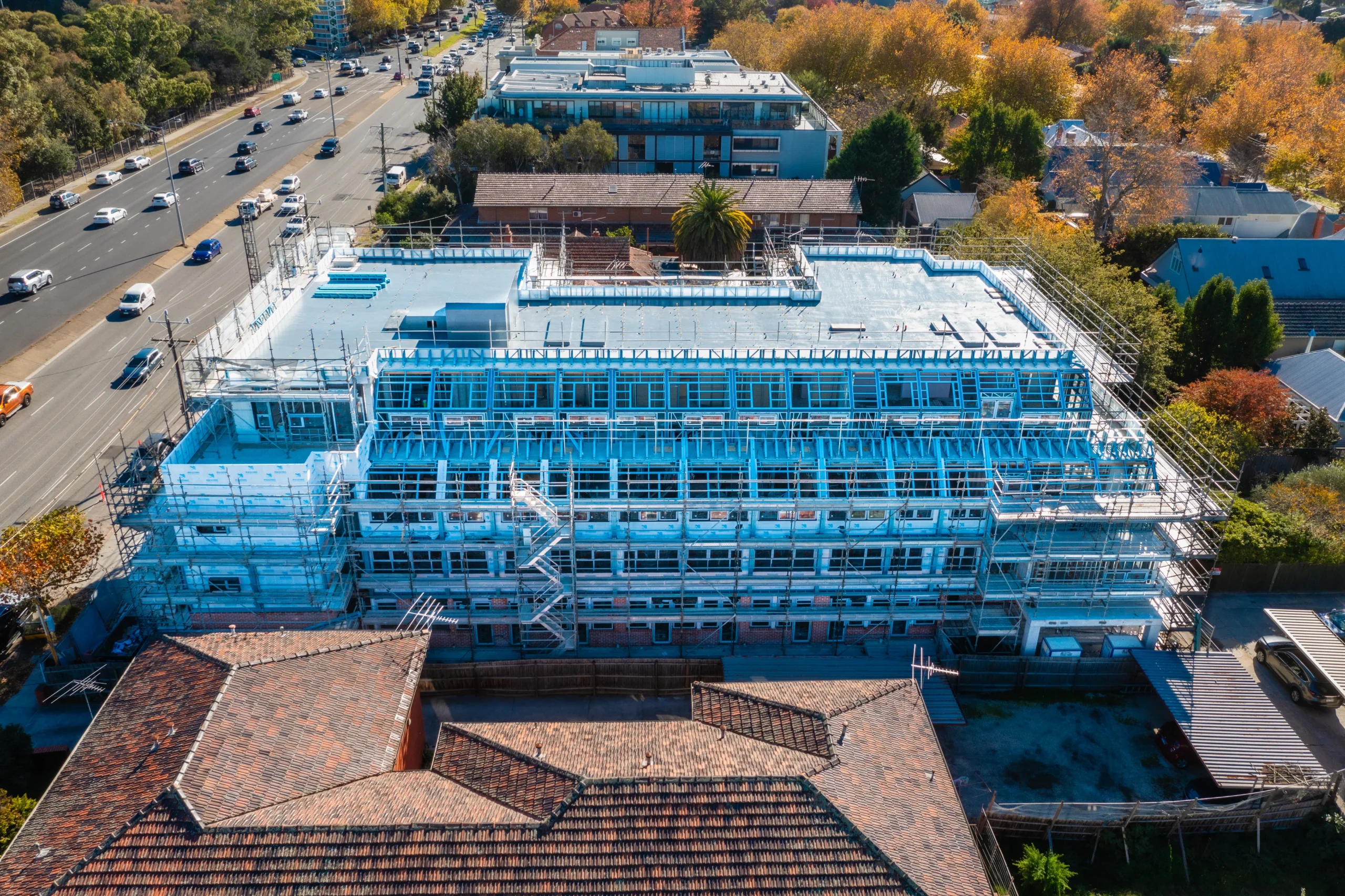
Facade steel framing is one of the more specialised applications of light gauge steel construction, yet it appears in a wide range of building types across Melbourne and Victoria. You can see it in multi-storey apartment buildings, commercial office fit-outs, student accommodation developments, mixed-use projects, and high-end residential construction where architectural cladding systems are mounted to a purpose-built steel subframe.
Despite its prevalence, facade steel framing is often misunderstood or conflated with structural wall framing. The two systems serve different purposes, have different engineering requirements, and are specified and installed in different ways. Understanding the distinction helps builders, architects, and developers make better decisions during the design and procurement phases of any project involving an external cladding envelope.
CMC Steel Solutions designs and installs facade framing systems across Victoria, including a recently completed 118-room student accommodation project in Malvern East where light gauge steel facade frames were used to support the external cladding envelope across the full height of the building. This guide explains what facade steel framing is, how it works, and where it delivers the most value.
Facade steel framing, sometimes called a light gauge steel (LGS) facade subframe or curtain wall backing frame, is a non-loadbearing steel stud framing system fixed to the face of a building’s primary structure. Its primary function is to provide a stable, plumb, and dimensionally accurate substrate to which external cladding materials are fixed.
Unlike structural wall frames, which form part of the load-bearing system and transfer vertical and lateral loads from the roof and upper floors down to the foundations, facade frames carry only the self-weight of the cladding system and the wind loads acting on the building face. They are engineered to resist these loads and to transfer them back to the primary structure through a system of brackets and fixings, but they do not contribute to the building’s primary structural system.
The distinction matters from an engineering and certification perspective. Structural frames require a higher level of engineering input and are subject to more demanding compliance requirements. Facade frames have their own engineering requirements relating to deflection limits, fixing capacities, and wind load resistance, but these are assessed separately from the primary structural design.
A light gauge steel facade framing system typically consists of the following elements:
The selection of stud size, gauge, and spacing is determined by the engineering assessment for each specific project, taking into account the building height, wind region, cladding weight, and span between fixing points on the primary structure.
Facade steel framing appears across a broad range of building types in Victoria. Some of the most common applications include the following.
Several properties of light gauge steel make it particularly well suited to facade framing applications compared to alternative subframe materials such as timber or aluminium.
Our blog on why Melbourne builders trust steel frames for superior construction covers the broader performance advantages of steel framing in Victoria’s building environment.
One consideration that is often underestimated in facade frame design is thermal bridging. Steel is a highly conductive material, and where steel studs pass continuously from the interior face of the wall to the exterior cladding layer, they can create thermal bridges that reduce the effective thermal performance of the wall assembly.
In modern facade frame design, thermal bridging is managed through a combination of strategies. These include the use of thermal break materials at bracket connections, the positioning of insulation within and external to the stud cavity, and the specification of stud gauges and spacings that minimise the total cross-sectional area of steel conducting through the assembly.
The NCC’s energy efficiency provisions in Section J apply to commercial buildings and set minimum requirements for the thermal performance of the building envelope. Facade frame designs for commercial and multi-residential buildings should be assessed against these requirements during the design phase to avoid costly remediation after the frame is installed.
Facade steel framing systems require engineering sign-off, and the documentation requirements depend on the building class and the complexity of the facade system. At a minimum, the engineering assessment should confirm the wind load capacity of the stud-and-track system, the design of the bracket connections back to the primary structure, and the deflection performance of the facade under design wind loads.
Excessive deflection in a facade frame can cause cracking in rigid lining systems, failure of sealant joints between cladding panels, and in severe cases, detachment of cladding elements. Deflection limits for facade systems are typically more stringent than for structural walls, and the engineering must confirm that the specified frame meets these limits under the design wind pressures for the building’s location and height.
CMC Steel Solutions provides engineered facade framing solutions with full documentation as standard. Our design team uses 3D BIM modelling to coordinate the facade frame geometry with the primary structure and the cladding system, ensuring that tolerances are managed before installation begins.
Our overview of light gauge steel framing in Melbourne provides context on the broader LGS system that facade framing is part of.
Builders new to facade steel framing sometimes ask how it differs in practice from standard steel stud structural framing. The key differences are as follows:
Our comparison of steel stud vs timber stud framing covers the material performance differences that apply across both structural and facade framing contexts.
CMC Steel Solutions designs and installs light gauge steel facade framing systems for residential, commercial, and institutional projects across Victoria. We bring the same BIM-coordinated, CNC-fabricated approach to facade frames that we apply to structural framing, which means the facade system arrives on site accurate, documented, and ready for installation.
Whether you are working on a new multi-storey development, a commercial facade upgrade, or a prestige residential project with a complex cladding specification, our team can provide an engineered facade framing solution that meets the requirements of your cladding system and the performance expectations of your building surveyor.
Call us on 1300 285 566 or email info@cmcsteelsolutions.com.au to discuss your facade framing requirements and request an obligation-free quote.