Steel Frames

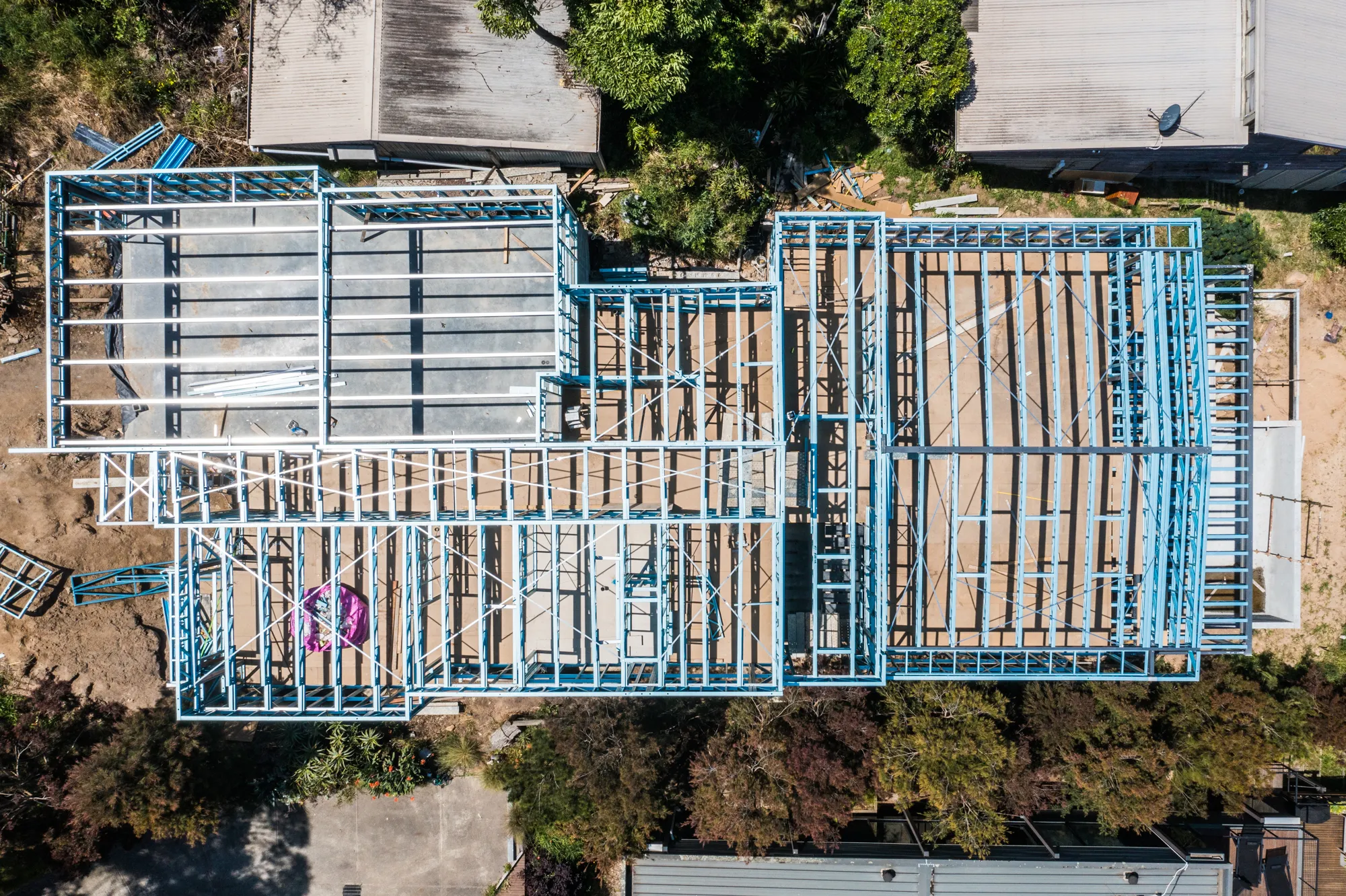
This piece takes a different angle to most of what gets written about prefab steel frames. Rather than making the case for why prefabricated steel framing suits a home build, which we have covered in detail in Prefab Steel Frames: A Modern Solution for Faster Construction in Melbourne, this is a market analysis: how big the demand for prefabricated steel frame homes actually is in Australia right now, what is driving that demand through 2026, and where it is concentrated.
According to Mordor Intelligence’s analysis of Australia’s prefabricated buildings market, the sector was valued at around AUD 8.35 billion in 2025 and is forecast to reach roughly AUD 9.01 billion in 2026, growing at a compound annual rate of about 7.88 per cent through to 2031, when it is projected to be worth approximately AUD 13.17 billion. Steel is reported as the leading material within the broader modular and prefabricated construction sector, ahead of concrete, timber and other materials, reflecting its suitability for repeatable, factory based manufacturing. It is worth noting that different market research firms define “prefabricated” and “modular” construction slightly differently, and scope in different mixes of residential, commercial and infrastructure work, so headline figures vary somewhat between reports. The direction, however, is consistent: sustained, above average growth against the broader construction sector.
Year | Market Value | Note |
|---|---|---|
2025 | AUD 8.35 billion | Australia’s prefabricated construction market, all materials and building types |
2026 | AUD 9.01 billion | Forecast, approximately 7.9 per cent annual growth |
2031 | AUD 13.17 billion | Forecast, at a compound annual growth rate of about 7.88 per cent from 2026 |
The single biggest structural driver behind rising prefab demand is straightforward: Australia is not building homes fast enough to meet its own targets. Australia completed approximately 177,000 new dwellings in 2024, against underlying demand estimated at closer to 223,000 for that year. The National Housing Accord set a goal of 1.2 million new homes across the country by 2030, yet current policy settings and completion rates point to a shortfall of well over 200,000 homes against that target by the time the Accord’s period ends. Prefabricated construction, where wall frames, trusses and floor systems are manufactured in a factory while site works proceed in parallel, is one of the few levers available that can genuinely compress the build program rather than simply add more workers to a conventional site built process, which is exactly why housing supply policy at both state and federal level increasingly references offsite and modern methods of construction directly.
The second major driver is a genuine, well documented shortage of construction labour. The Housing Industry Association reported its Trades Availability Index at negative 0.47 in the final quarter of 2025, consistent with what HIA describes as an ongoing structural shortage of skilled trades, with the most acute shortages in bricklaying, ceramic tiling and roofing. Separately, sector forecasting has pointed to a shortfall approaching 300,000 construction workers nationally by 2027, driven by population growth, a large infrastructure pipeline and rising housing targets competing for the same pool of tradespeople.
Prefabrication addresses this shortage directly rather than around the edges. Manufacturing a steel frame in a controlled factory environment requires a smaller, more specialised workforce than an equivalent volume of site based framing carpentry, and that workforce can serve many projects sequentially from one facility rather than being distributed thinly across dozens of individual building sites competing for the same tradespeople. For builders and developers who cannot simply wait for the labour market to ease, prefabricated steel framing is one of the more immediately actionable responses available.
Rising material and construction costs are pushing developers toward methods that reduce waste and rework. Analysis of Victorian projects cited by Mordor Intelligence reports build times 40 to 50 per cent faster and in process energy use around 60 per cent lower when prefabrication is used in place of conventional site building, figures that translate directly into holding cost and financing savings for developers on tight feasibility margins. Factory manufactured steel frames also carry a further, less discussed advantage: dimensional consistency across every unit on a multi lot project, which matters increasingly as build to rent and institutional residential investment, both of which prize predictable, repeatable quality across large numbers of dwellings, become a larger share of new housing delivery.
Behind the headline market figures sit several distinct groups of buyers and developers, each drawn to prefabricated steel framing for a different reason. Volume and build to rent developers value the dimensional consistency of factory made steel frames across large numbers of near identical dwellings, where variation between lots translates directly into cost and defect risk at scale. Owners in bushfire and flood affected regions increasingly favour prefabricated, non combustible steel systems for rebuilds, where speed of delivery and the removal of on site weather delays both matter more than usual. Homeowners adding a secondary dwelling or granny flat, a fast growing segment as housing affordability pressure pushes more households toward smaller, additional dwellings on existing blocks, are drawn to the shorter, more predictable program a prefabricated steel frame allows. And in Western Australia specifically, resource sector workforce accommodation remains a significant, steady source of demand, since prefabricated steel structures can be manufactured in a capital city and transported to remote sites far more efficiently than an equivalent volume of site built construction could ever be delivered.
Prefabricated construction demand is not evenly spread across the country. Sydney accounts for close to a quarter of Australia’s prefabricated buildings market, driven by high rise infill sites and social housing programs that require rapid delivery, while Perth is forecast to record the fastest growth of any major Australian city, driven substantially by demand for mining workforce accommodation in Western Australia’s resource regions and the logistics advantage prefabrication offers for remote site delivery.
Victoria sits within this picture as one of the largest and most consistent markets for prefabricated residential construction, underpinned by the state’s own housing supply targets and a large, ongoing pipeline of detached, medium density and multi unit residential work across Melbourne’s growth corridors and middle ring suburbs. That combination of policy pressure, population growth and a deep base of established fabricators makes Victoria one of the more mature prefab markets in the country, rather than an emerging one.
Within the prefabricated and modular construction sector, steel is reported as the leading structural material, ahead of concrete and timber, largely because light gauge steel components are exceptionally well suited to factory based, repeatable manufacturing: sections are roll formed to precise, consistent dimensions, cut and punched by computer controlled machinery, and assembled into panels or trusses that arrive on site ready to fix rather than requiring on site adjustment. We have covered the practical, on the ground case for steel framing extensively elsewhere on this site, including our guide to residential steel framing across Melbourne and Victoria, so this piece will not repeat that ground. What matters for a market demand analysis is simpler: as prefabrication itself grows as a share of Australian residential construction, steel is growing its share within that expansion, not losing ground to it.
None of these drivers, the housing shortfall, the labour shortage, or cost and financing pressure, are short term or cyclical. They reflect structural conditions in the Australian construction sector that are expected to persist through 2026 and beyond, which is why market forecasts across multiple research firms consistently show prefabricated construction growing faster than the construction sector as a whole rather than simply tracking it. For a builder or developer weighing up framing methodology on an upcoming project, that context matters: a decision to move toward prefabricated steel framing is no longer a bet on an emerging trend, it is a response to conditions that are already well established and, on the available evidence, deepening rather than easing.
Demand is strong and rising through both years. The broader prefabricated construction market grew from roughly AUD 8.35 billion in 2025 to an estimated AUD 9.01 billion in 2026, and light steel frame systems are taking a growing share of that market because they suit the same factory based manufacturing that is helping the sector outgrow conventional site built construction. The underlying demand drivers, a national housing shortfall, a skilled trades shortage, and cost pressure on conventional builds, all strengthened rather than eased between 2025 and 2026.
Australia’s prefabricated construction market, spanning steel, concrete and timber across residential, commercial and other building types, was estimated at around AUD 8.35 billion in 2025 and is forecast to grow at close to 7.9 per cent annually through 2031. Steel is reported as the leading material within that market, and demand for steel frame homes specifically is rising in step with the broader sector.
Three structural factors are driving demand: a national housing shortfall against targets such as the National Housing Accord, a well documented shortage of skilled construction trades, and cost and financing pressure that favours faster, less wasteful building methods. Prefabricated steel framing addresses all three by shifting labour into a factory setting and compressing on site build times.
Sydney holds the largest share of Australia’s prefabricated buildings market, driven by high rise infill and social housing delivery. Perth is forecast to grow fastest, driven by mining workforce accommodation demand in Western Australia. Victoria is one of the largest and most established prefab markets nationally, supported by sustained population growth and housing supply policy across Melbourne and regional Victoria.
Yes, steel is reported as the leading structural material within Australia’s modular and prefabricated construction sector, ahead of concrete and timber, largely due to its suitability for precise, repeatable, factory based manufacturing.
If you are planning a project and want to understand how prefabricated steel framing could fit your build program and budget, our team can talk through the options. Get in touch with CMC Steel Solutions on 1300 285 566, email info@cmcsteelsolutions.com.au, or contact us to request a free, obligation free quote.