Steel Frames

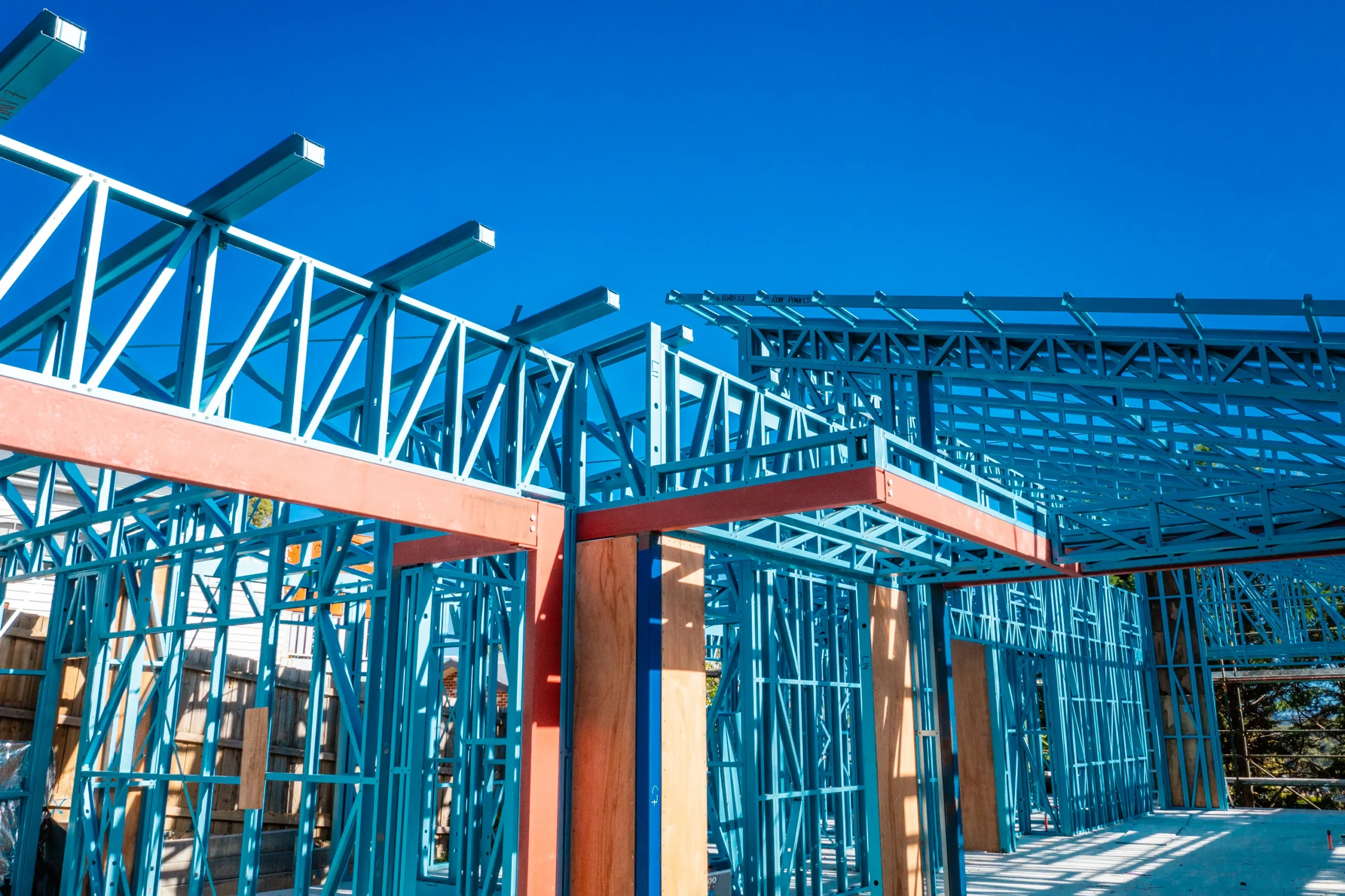
When a distributor or contractor orders steel studs, price is rarely the only thing riding on the decision. A batch that is slightly out of gauge, inconsistently coated, or late for the third time this quarter costs far more than the gap in unit price ever suggested it would. This guide sets out what experienced contractors and distributors actually check before committing to a steel stud supplier, and why each of these checks matters when you are ordering in volume rather than buying a handful of studs for one job.
Being able to fill an order is the minimum bar, not the whole answer. Real reliability is about whether the studs in this month’s order perform exactly the same way as the studs in last month’s order: same gauge, same coating, same tolerances. For a distributor supplying multiple builders, or a contractor running several sites at once, that consistency is what keeps framing crews moving without unplanned delays or callbacks.
Steel framing’s share of Australian construction has been on a steady upward trend, and industry forecasts covered in our article on the steel framing industry’s expected growth to 2030 point to that trend continuing. As demand grows, so does the risk of supply bottlenecks with any manufacturer that does not have the capacity or process discipline to scale without letting quality slip. Distributors and contractors who lock in a relationship with a genuinely reliable supplier now are in a stronger position as demand tightens, rather than searching for a new supplier under pressure when an existing one cannot keep up. Our overview of steel frame construction technologies and trends covers some of the broader shifts, including prefabrication and digital fabrication, that are changing what capacity actually looks like for a modern steel framing supplier.
Steel stud gauge and dimensions determine load capacity, fixing performance and how well a stud sits against the next one in the frame. Studs that drift outside their stated tolerance cause real problems on site: fixings that do not seat properly, tracks that do not align, and walls that are harder to keep straight and square. A supplier worth ordering from repeatedly should be able to speak specifically to their dimensional tolerances and, ideally, show test or inspection data rather than simply asserting that their product is compliant.
Cold formed steel framing in Australia is governed by AS/NZS 4600 and, for residential and low rise construction, the NASH Standard. A reliable supplier manufactures to these standards as a baseline, not as a marketing claim. Our explainer on AS/NZS 4600 and our broader guide to Australian steel framing standards both cover what these standards actually require in more detail, which is worth understanding before you rely on a supplier’s word alone. If you are buying TrueCore branded steel, that adds a further layer of manufacturer backed quality assurance behind the product.

Coating class, typically Z275, AZ150 or AM150 under AS 1397, needs to match the exposure conditions of the project the studs are going into. A coastal build and an inland build do not have the same corrosion risk, and a supplier who cannot clearly confirm coating class batch to batch is asking you to take that risk on trust rather than on data. Our guide to corrosion resistance and coastal steel framing in Victoria explains how coating class should be matched to a site’s actual exposure. This is a detail that will not show up as a problem on delivery day. It shows up years later, when it is far more expensive to fix.
A steel stud is only as good as the connections holding the finished frame together, and this is a detail that is easy to overlook when the focus is on the studs themselves. Brackets, self drilling screws, bracing straps and hold down anchors all need to meet the same coating and compliance standards as the framing members, since a frame is only as durable as its least protected component. Our guide to steel frame brackets, connectors and fixings covers this in detail, including where a small, easily overlooked component like a grommet fits into the bigger picture. A supplier who can speak confidently about connection hardware, not just stud gauge, is usually a supplier who understands the whole system rather than just the product they are selling.
For a distributor running repeat orders across multiple builder accounts, a supplier who reliably hits the same lead time and holds the same specification order after order is worth more than a supplier offering a marginally lower price on a single one off quote. Ask any prospective supplier how they handle a spec change, a volume increase, or a short notice reorder, since the answer tells you a lot about how they will actually perform once you are relying on them.
The real cost of an unreliable supplier rarely shows up on the invoice. It shows up as a framing crew standing idle waiting on a delayed delivery, a builder discovering an out of tolerance batch after a wall is already half framed, or a distributor fielding a complaint from a builder client about product that does not match the last order. Each of these has a knock on cost in lost labour time, rework, and damage to the relationship between a distributor and the builders who depend on them. Many of these issues trace back to the same root causes covered in our guide to common steel framing mistakes, several of which start with a supply or specification issue rather than an error on site.
Structural steel framing supplied in Victoria should come with a Regulation 126 structural engineering certificate, along with mill certification confirming the steel itself meets the relevant Australian Standards. This paperwork is not a formality. It is what your builder, your building surveyor and, ultimately, your own liability rely on if a compliance question ever comes up on a project. A reliable supplier should also provide clear erection drawings alongside the frame plan, giving the installing crew an unambiguous reference for how the frame goes together on site. CMC Steel Solutions provides a Reg 126 certificate, full erection drawings and the structural steel frame plan with every project as standard.
Not every steel stud on the market is manufactured to the same specification, even where a supplier claims general compliance. TrueCore steel carries its own manufacturer backed warranty and quality assurance programme, which is one of the reasons it is specified as often as it is across Victorian projects. Our guides to what TrueCore steel is and the benefits of choosing TrueCore steel frames cover this in more detail. For a distributor buying at volume, sourcing from a supplier who can confirm exactly which steel brand and specification is behind every batch removes a layer of uncertainty that a generic, unbranded product cannot match.
Where and how steel studs are manufactured affects how much control a supplier actually has over consistency. A supplier fabricating in house, on local equipment, can adjust quickly if an issue is identified and can speak with certainty about every stage the product has gone through. A supplier reselling imported stock is further removed from that process, which can make it harder to resolve a quality issue quickly or to guarantee the same consistency shipment after shipment. CMC Steel Solutions fabricates every frame at our own facility in Craigieburn and has never outsourced manufacturing.
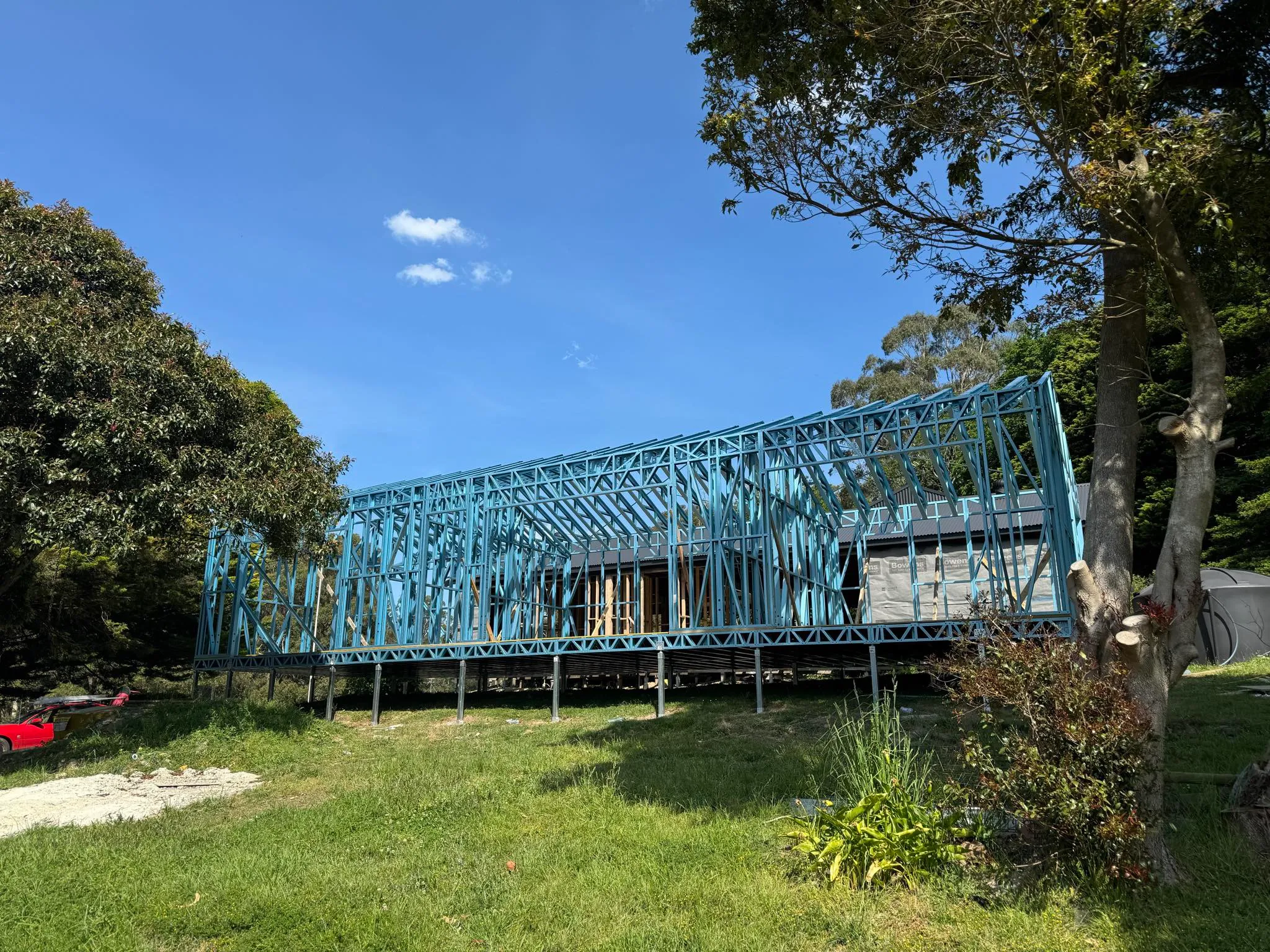
Before committing to a new steel stud supplier, whether as a distributor adding a new line or a contractor moving away from an existing arrangement, it is worth running a short, practical evaluation rather than relying on a sales conversation alone.
Our guide to how to choose the right steel solution provider covers this evaluation process in more depth, and is a useful reference to work through alongside a prospective supplier before signing off on a new account.
CMC Steel Solutions has supplied engineered steel framing to builders, contractors and trade partners across Melbourne and Victoria for more than a decade. Every project is backed by 3D BIM modelling before fabrication begins, precision CNC fabrication, and full documentation including a Reg 126 certificate and erection drawings. Because fabrication happens entirely in house at our Craigieburn facility, we can hold consistent gauge, coating and dimensional tolerances across every order. Our overview of CMC Steel Solutions’ expertise covers our background and approach in more detail, and we work directly with distributors and contractors on volume and repeat supply arrangements.
The most valuable steel stud supplier relationships are not built on a single competitive quote. They are built on a track record: gauge after gauge, delivery after delivery, project after project performing the same way. For a distributor, that track record is what you are actually reselling to your builder clients, whether or not it is stated on the invoice. Treating supplier selection as an ongoing relationship to manage, rather than a one off purchasing decision, is generally what separates distributors with low callback rates from those constantly fighting fires on behalf of a supplier who let them down.
What to check | Why it matters |
|---|---|
Gauge and dimensional tolerance | Determines load capacity and fit on site; inconsistency causes fixing and alignment problems |
AS/NZS 4600 and NASH Standard compliance | The baseline standards governing cold formed steel framing in Australia |
Coating class (Z275, AZ150, AM150) | Must match the corrosion exposure of the project site; inconsistency is a long term, hidden risk |
Connection hardware standards | Brackets, screws and bracing need the same coating and compliance as the studs themselves |
Lead time consistency | Affects programme reliability across repeat orders and multiple sites |
Reg 126 certificate, mill certification and erection drawings | Required documentation for compliance, builder confidence and liability protection |
In house vs imported manufacturing | Affects how quickly and reliably a supplier can resolve a quality issue |
Distributors typically check dimensional and gauge tolerance, compliance with AS/NZS 4600 and the NASH Standard, coating class consistency, documentation such as Reg 126 certificates, and whether the supplier can hold consistent lead times and specifications across repeat orders.
Cold formed steel framing is governed by AS/NZS 4600, with the NASH Standard providing further requirements specific to residential and low rise steel framing.
Coating class, such as Z275, AZ150 or AM150 under AS 1397, needs to match the corrosion exposure of the project site. Inconsistent coating is a hidden risk that tends to surface years after installation rather than at delivery.
Yes. Brackets, self drilling screws, bracing straps and hold down anchors all need to meet the same coating and compliance standards as the framing members, since a frame is only as durable as its least protected component.
Yes. CMC Steel Solutions supplies engineered steel framing to builders, contractors and trade partners across Melbourne and Victoria, fabricated in house at our Craigieburn facility.
A Regulation 126 structural engineering certificate, mill certification confirming compliance with the relevant Australian Standards, and clear erection drawings should accompany structural steel framing supplied in Victoria.
Local manufacturers generally have tighter control over consistency because they oversee every stage of fabrication directly, which makes it easier to resolve a quality issue quickly compared with resold imported stock.
Call CMC Steel Solutions on 1300 285 566, email info@cmcsteelsolutions.com.au, or contact us online to talk through your project.